
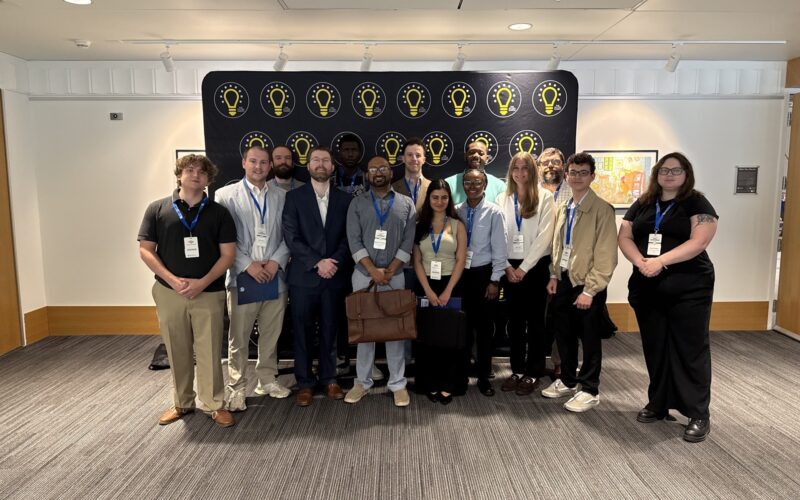
Auburn University at Montgomery’s E-Con Club takes a group photo at the University of Kentucky. (Courtesy of Agnitra Roy Choudhury)
The Auburn University at Montgomery Economics Club took their first trip to the E-Con games at the University of Kentucky on March 26-27, marking a major milestone for the department.
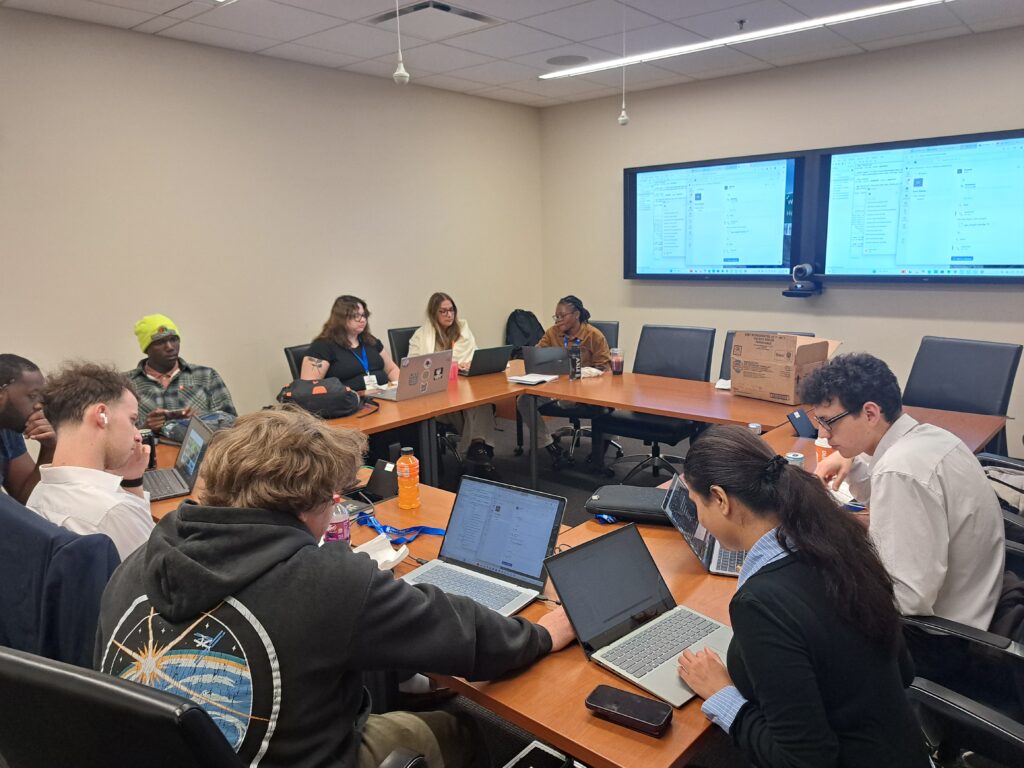
Economics department chair and associate professor James Francisco said that for the E-Con on-site competition, students were given a data set from the event sponsor EquiBase, a Kentucky based horse racing data firm.
“They released a data set and a prompt and it basically said to come up with a model to use this data to help us grow horse racing,” Francisco explained, adding that they wanted to promote how useful the data would be to gamblers.
Students were given 24 hours to clean the data set, or put the data in a way it can be manipulated by software, see what the data says, and find a way to make it commercially viable.
Dylan Davis, a senior economics major, said they were “asked to predict the winners based off of GPS data,” since they started putting GPSs on horses a few years ago to better track their speed.
Alex Easley, also an economics senior and club president, described their goal for the prompt. “Their whole idea was how they could make sports gambling more accessible to younger bettors.”
Francisco said that Easley came up with a suggestion that he loved. “He said they could come up with a prop bet on over or under a horse’s max speed.”
Ultimately, the AUM economics team ended up finishing tied for sixth out of 30 teams. “We felt that was a pretty solid effort for our first time.”
Francisco says now that they know what to expect, he’s excited for their next attempt saying he felt they did amazing on the “meat and potatoes economics” but the thing that they didn’t know matter was the style of the presentation mattered.
“Some teams were trying to do things like trading cards” and went on to say that next year they’ll try to make it look a bit fancier. It was something he noticed the teams that finished in the top five did.
“They did have people from other disciplines involved,” which helped in graphic design to make their presentations stand out more, Francisco said. “We probably need to bring more people in who have a different skill set next year.”
Davis says that was his biggest take away after seeing other teams was economics needs to be interdisciplinarity, adding “some of those teams had really great marketing majors and finance majors who had cut their teeth giving presentations to business partners before.”
“We should bring someone in graphic design,” Easley added on from Davis’ thought. “The PowerPoints we make in E-Con are very simple and straight to the point. We throw a data set up there and some numbers.”
Going forward, Francisco thinks this will have a tremendous impact on the economy department not just from having the students get a chance to meet and network with companies but with other schools as well.
“We spoke to another university about trying to do a smaller, regional version of these for schools in Alabama, Tennessee and doing it in the fall as a practice run for the games in the spring.”
Some of the larger schools like Purdue, Syracuse and Kentucky were there and not only did they get their name out there, but getting networking chances with those schools is great for both the faculty but also the students looking for a chance at higher education opportunities.
Davis said they’re hoping to go back next year to help build a stronger alumni network for the business school. “We got a level of exposure at the conference that was a first time for a lot of us.”
Francisco says he would love to go again next year but concerns like funding are always a factor. “Usually once a semester we sell Cinnabons. They go and make them and buy them at cost so we sell them to help fund these trips.”
“We’re trying to expand the club,” Easley said when asked what he wanted to tell students thinking about this opportunity, “you don’t need to be in E-Con to be in the E-Con club.” With Davis adding “we want to attract people with a diverse skillset.”