

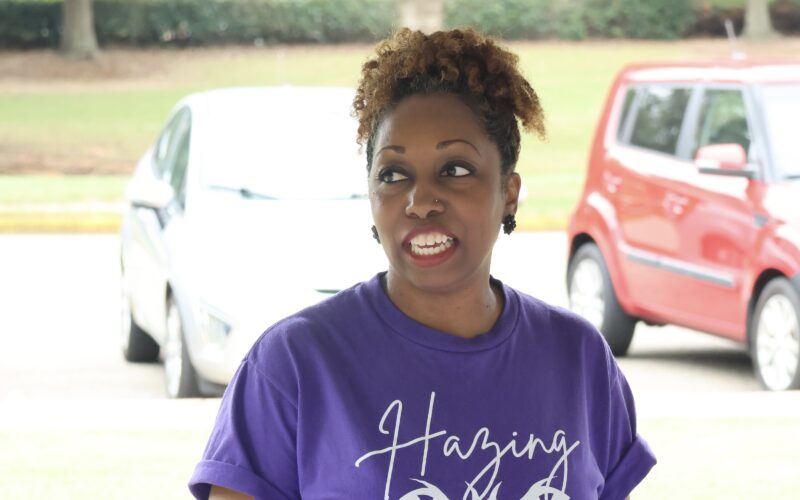
Dr. Black at the Freeze out hazing event next to the admission office (photo by Sofia Cerebuch)
https://on.soundcloud.com/adpi3wRGSQb2Yvqjcs
By Haleigh Bedwell – AUMnibus Writer
Montgomery (Sept. 25, 2026) – When students hear the word “hazing”, they may imagine physical harm, alcohol or extreme humiliation. But hazing does not always look obvious, says one AUM director who organized AUM’s latest hazing awareness week.
“Hazing is something that can happen in any organization,” said Andrea Blake, AUM Assistant Director of Accountability and Advocacy (OAA).
“A number of students have heard the word (hazing) before, but they’re not really quite sure of what it actually looks like,” Blake said. That is why AUM’s Hazing Prevention Week, as part of Student Affairs, included activities that focused not only on hazing but also on belonging, leadership and service.
Blake said one of the biggest misconceptions about hazing is that it only happens in Greek organizations or athletics. Hazing Prevention Week gives students the opportunity to understand that hazing can take many forms and helps them to know what to look for and how to prevent it.
“They may be just trying to help someone else,” Blake said. The OAA also wants students to know that they do not have to be the person experiencing hazing to speak up.
The Hazing Prevention Network is a hot line that is there to help and promote hazing prevention to everyone. One thing that stands out is a parent speakers section. This is a section called Through the Love, Mom & Dad program, parents share their very personal stories of how hazing has impacted their families and lives, education about hazing prevention, and a call to action for your community or organization.
According to Blake, one of the key differences between hazing and bullying is that hazing involves a group and is connected to gaining or maintaining a membership. That could mean an activity that humiliates a student in front of others or makes them feel pressured to participate in something to become part of an organization.
At last week’s event,(Sept. 22, 2026) students participated in trivia and the “Warhawk Challenge,” which included questions about what it means to belong and be a good leader. Blake said the lighter activities were intentional because students’ desire to belong can sometimes impact their willingness to accept harmful behavior.
Hazing prevention is only one part of Blake’s work. The OAA helps students understand university policies, their rights and responsibilities and where to go when they need support. Blake said the office is sometimes confused with Counselling Services, but its role is also to help connect students with other resources when needed.
For Dr. Blake, helping students is part of a career that took an unexpected path. Before working in higher education, she spent seven years as an intelligence analyst with the FBI-check. She said the research, investigation and relationship-building skills she got from the FBI continue to help her work with students today.
Now Blake hopes students leave Hazing Prevention Week with a better understanding of what hazing can look like and be more confident to report concerns.
She also wants students to think about the type of leader they want to be and whether the organizations they join reflect on their own moral and personal values. “It shouldn’t cause anyone harm or humiliation,” Blake said.
For Blake, creating a safer campus starts with students understanding that belonging to a group should never come at the expense of their safety or dignity.