

Photo courtesy of Steve Johnson on unsplash.com
By: Nicholas Drayton
MONTGOMERY, Ala. – The impact of artificial intelligence on different professions is manifesting in different fields such as medicine and government, as well as technology, the arts and media fields. This advent of technology has created a level of excitement along with apprehension among students and educators at Auburn University at Montgomery.
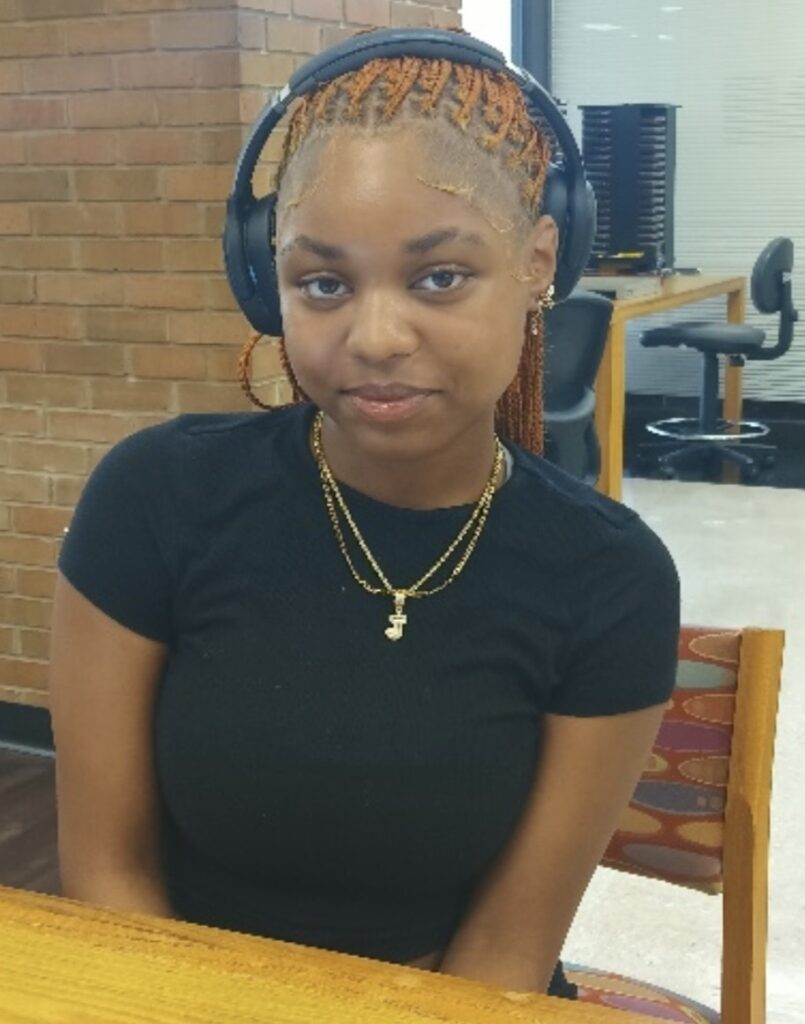
Jewels Wolfe, a sophomore nursing major from Phenix City voiced a cautionary stance. “I feel like it’s good for certain things, but with its development it could be bad in the future with falsifying facts, statements, and claims,” Wolfe said. Wolfe expressed concern that AI could be misused to falsify facts and blur the line between truth and deception, especially in government and media. “Especially with those that work in the government, because it will become so easy to alter small things and present them as facts. With its development in the future, we may not know what is real or false.”
As far as faculty is concerned, what’s at stake for the future of professionals and jobs is much more troubling. Amy Locklear, Distinguished Senior Lecturer and Honors Faculty in the AUM Department of English and Philosophy, emphasized that journalism requires human-to-human learning that AI cannot replicate.
“The pervasiveness of AI-generated text removes the need for human-to-human modeling of behaviors and mores, elements I think journalism needs to be its best version of itself,” Locklear said.

“AI is soul-less. And writing, as an art and practice, needs that human soul.” – Amy Locklear
Recent reports echo these worries. In a 2024 Brookings article “Can Journalism Survive AI?” Courtney C. Radsch discussed traditional journalism roles as automation advances. “Unlike journalists, AI cannot go into the courtroom or interview a defendant behind bars, meet with the grieving parents of the latest school shooting victim, cultivate the trust of a whistleblower, or brave the frontlines of the latest war,” Radsch said. The Brookings fellow added that without access to human-created, high-quality content that journalism provides, foundational models that fuel machine learning and generative AI will malfunction.
Students at AUM were split on their opinions on the effect of AI on creativity, work and day to day academic activities. Crow Horn, a junior biology major, criticized AI’s role in art, said, “I like to do art and AI has taken over. People are using AI to steal other people’s art instead of using their own.” Hannah Jones, a sophomore biology major, added, “I don’t like AI because it’s taking over human creativity.”
Not all students were opposed. McKenzie Smith, a freshman sports management major from Baton Rouge, La., appreciated AI’s brainstorming potential. “I like it because it’s useful for coming up with ideas and topics,” she said. Similarly, Rebecca Komers, a senior criminal justice major from Nashville, Tennessee said she valued its efficiency: “I like it because it’s beneficial for finding information easy.” Her sister, Karris Komers, a senior concentrating in AI from Carbondale, Illinois, explained she uses it as a learning aid. “It helps me simulate what teachers mean. I take the syllabus and put it in AI to get a better understanding of what is required by the instructor,” she said.
For AUM students entering technology, business, media, journalism or creative fields, these tensions raise serious questions: Will AI become a tool to enhance their work, or a force that diminishes opportunities and erodes creativity? For now, voices on campus show both optimism and alarm, reflecting a generation that will inherit AI’s most significant impacts.